G is for…Gnocchi
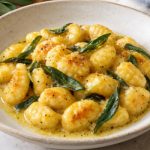 So, what do we know about gnocchi? Pasta's lumpy cousin?
Well, they're usually made with potato and they've been around since Roman times. Actually both true, but pause to consider that impossible juxtaposition. We know that the potato has been in Europe for a mere 400 years or so (see P is for Potato from 2023). But yes, gnocchi can be traced back to Roman times, when the dough would have been made with semolina flour mixed with eggs.
The word either comes from nocchino, meaning a knot in wood, or nocca (knuckle). For once, you can see why. We'll come on more obscure names presently. It appears that the potato started to be used in the 19th century when the price of milling wheat soared. Modern gnocchi are a combination of the two, the balance being critical. Too much flour and the finished article will be leaden: too little and it may dissolve in the cooking water.
In his La scienza in cucina e l'arte di mangiar bene (The Science of Cookery and the Art of Eating Well), Pietro Artusi relates the sory of a lady whose gnocchi simply disappeared. The reason was too little flour, but it was put down to a folletto - a little goblin. In the same book he does have a recipe for gnocchi as we know them, but he wasn't averse on going off on a tangent. Another recipe which he lists with the same name contains chicken breast, Parmesan and nutmeg. Hmm.
In Tuscany they have a similar dish called gnudi. This literally means naked. It's a mixture of cheese and flour. The rationale is that it's equivalent to a ravioli filling without the outside clothes. Did I mention names? Well, of course the French got in on the act. Gnocchis à la parisienne is a hot dish of dumplings made of choux pastry served with béchamel sauce. All well and good, and no doubt rather tasty. But what about a version made in Nice? It includes Swiss chard and is known locally as merda dé can (literally, dog shit). Think I'll pass.
More traditions abound. In Rome, gnocchi were eaten on a Thursday, followed by fish on Friday and tripe on Saturday. But go to South America and things start to get weird. In Paraguay, Uruguay and Argentina, one eats gnocchi on the 29th day of the month. (Don't know what happens in February.) Money is put under the plate to bring prosperity. In the latter two countries ñoqui is the word for a bogus employee. This could be one who turned up only on the last day of the month to collect his salary (when people were paid in cash). Now it could be someone who is non existent, retired or even dead. A flight of fancy? Well, no. A 2015 study by KPMG estimated that 5 to 7 percent of Argentine public sector employees were ñoquis.
Researching food? It can take you to some very odd places.