In Praise of the Coconut
 If you've been reading these columns since we got back from Sri Lanka you'll be aware of the importance of the coconut in the cuisine of that lovely country. Because of that I learned a great deal about it, and was appalled at my prior ignorance. While I'm sure your knowledge level isn't as low as mine was, here are a few things I've picked up.
When was your first encounter with today's hero? For many Scots of my generation, the first meeting would be at the shows (that's a funfair to the rest of the English speaking world). Perched on sticks (or glued on by the more unscrupulous operators), this hard hairy thing was yours if you managed to knock it off its perch. When you got it home it was invariably a disappointment. I'd read about coconut milk and, on occasion, about the delights of coconut water. Yet when mum or dad at considerable risk to life and limb got the thing open, liquid came there none. The white coating seemed resistant to knife or spoon. As a result the nut was usually chucked out, or tied to a bird table, hence the bad joke about self appointed media censor Mary Whitehouse being appalled by a broadcaster referring to tits like coconuts. The BBC had to explain that he had continued, and sparrows like breadcrumbs.
On the food front, coconut seemed to be restricted to sweet things. Cakes, Bounty bars or that favourite of church bring and buy sales, coconut ice. (In two colours, if you please.)
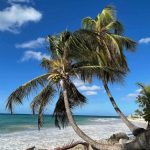
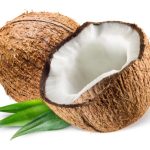 As I grew older and more cosmopolitan, I admired coconut palms on tropical shores and enjoyed cool coconut water served in the shell. For some reason, it never occurred to me to question why the green or orange things I was observing weren't brown and hairy. Then driving along a Sri Lankan road we encountered two men with a pile of fruit and an evil looking spike on which they were opening them. From this outer skin (the exocarp, since you ask) emerged our familiar brown hairy pal. Continuing in botanical vein, the hairy part is known as the mesocarp, and the hard shell is the endocarp. Memorise this paragraph and amaze your friends at parties.
As we now know from the post a week or two ago, you have to manufacture the milk. And coconut water? You get that only from young fruit. Coconut water can be fermented to produce coconut vinegar, and coconut oil is extracted from coconut milk. You can collect the sap to create the rotgut drink known as toddy. Leave that to ferment on its own and it becomes palm wine. Distil palm wine and you get arrack. I tried the latter when on holiday. Rather good, like a superior grappa. But we're not finished yet. Boil the sap and you'll get a sweet syrup from which you can produce palm sugar or jaggery.
And that's before we get to the coir matting made from the mesocarp, and the charcoal from the shells; or the houses, rafts and canoes made from the wood. Let's not forget the furniture, or indeed the soaps and cosmetics, or its role in Hindu ritual.
Ladies and gentlemen, when you have time, raise a glass to this wonderful tree and all its bounty (sorry). Not for nothing did it receive its Sanskrit name of kalpa vriksha, "the tree which provides all the necessities of life".
Great article. Thank you. Increased my knowledge. Who knows what goes on in that ‘heid’
Just a few years ago at Primary School a friend received a coconut in the post (label glued on) from her father who was a colonial administrator somewhere in the South Seas. Neither she nor her friends believed it was a coconut. Now I know it really was – label glued on the endocarp. Learning all the time.
Continuing the proud Reithian principles of Tom’s Food!