Risottos – Why Yours Aren’t As Good as The Italians
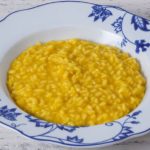 Our last week in Italy. Their food is simple, but sometimes deceptively so. Let's consider one of the great, classic dishes, and how to make it better. I have eaten a few phenomenal risottos while I've been here. They are silky; they are creamy; they have bite. They are fabulous. I wouldn't pretend to know how to recreate some of them, but I can share some tips on common errors.
The rice
I'm guessing you know that you need the short grained stuff. Arborio and Carnaroli are the most common ones in the UK. Those who know more than I will say that Arborio is less forgiving, in that it can go from al dente to mush more quickly. Many Italians swear by Vialone Nano, but I've never seen that in this country.
But here's a less well known error. For many it's second nature to wash the rice. DON'T DO IT! Why? Because washing removes some of the surface starch, and that's precisely what you do want for the creamy texture.
The stock
It's such a fundamental part of the risotto. For a great dish, you need great ingredients. Fresh and home made is best. We usually have a tub of chicken stock in the freezer. Yes, you can use a stock cube or pot, but it won't be the same. I was disconcerted to read that my Milanese guru used beef brodo, but if you want it you can find the good stuff, at a price.
A more simple and obvious tip is to make sure your stock is hot. When you start cooking, you don't want to be coming back to cold and reheating.
The veg
You're not making a paella, but you will need some onion or, preferably, shallot to kick things off. You do NOT want to see chunks in your final dish. That means your chopping skills have to be at their finest so that the veg disappears. A Tom's Tip. When cutting your shallot/onion in half, leave the root on. That makes it much easier to chop finely. Don't believe me? Watch Wolfgang Puck.
"Toasting" the rice
Hang on, I thought. I don't do that. Actually, yes, I do, though I don't use the term. By that we mean popping it into the pan, without liquid, once your onion/shallot is soft. Stir it around gently until the grains become translucent, but NOT brown. That will take a couple of minutes. You don't rush a great risotto.
At that stage I chuck in a glug of dry white wine or vermouth. Not everyone does, but the satisfying sizzle as it boils away tells me it's time to start adding the stock.
Cook gently
This is not fast food. You want it be cooking fast enough to absorb the stock gradually, but not bubbling like a witch's cauldron. Add your liquid a little at at a time. Don't flood the pan. Stir, yes, but not so vigorously that you break up the grains.
Don't overcook
This may seem obvious, but if you're not careful it can tip over quite quickly. When you reckon you're nearly al dente, take the pan off the heat. With a classic, such as Milanese, this is where you really get stuck in about your mantecura. See below.
Don't be boring
Any rice dish can be horribly dull. You will of course have seasoned your shallot at the beginning, but where else is your flavour coming from? A classic will have lot of cold butter and Parmesan (mantecura), but you can of course season with anything you like. Just make sure you season at the right time, and that everything is piping hot when you come to serve. Oh, and that creamy texture? That's from the consistency of the finished rice. No cream is added. Ever.
All'onda
This literally means like a wave. That's how your finished dish should be. Not pudding like: not soupy. Just smooth enough to glide gently over the plate (which you have, of course, preheated).
No latecomers
Risotto waits for no man - he/she/they/it. If they're not at the table when it's ready, eat it yourself.