B is for Beetroot
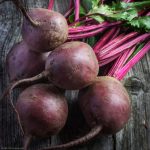 Were you pickled like me? No, Mrs Johnston, not like that. I mean, was your first experience of today's beauty in a jar with vinegar? And not vinegar as is used by us expert cooks, but the industrial strength stuff which you could use to strip paint. Maybe it meant that the producers didn't need to skin the beets first.
I have no issue with pickled veg, but for decades I was unaware of fresh beetroot's delights and versatility. We'll cook with it on Friday, but for today let's examine its roots. It is in fact related to spinach and chard, a reminder that it was originally cultivated for its leaves. It seems to have popped up first in the ancient Middle East. We tend to think of the ancient Romans as fighters rather than foodies, but the more I research, the more their names appear in dispatches. The root appealed to them (same colour as the posh togas, I suppose) and like their Empire it spread.
Unlike many natives of the Med, a cooler climate appealed to the beetroot plant. Think eastern Europe where
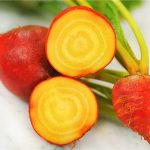
Golden Beetroot
it is a staple: but think Britain and we had to go and add vinegar. That's changing now. With food presentation assuming greater and greater importance (sometimes, sadly, at the expense of flavour) its dramatic hue can be a striking addition to any plate. If only the colour were confined to the plate. Have you ever cooked your own beetroot from scratch? Be warned. Unless care is taken, your hands, your person, indeed your whole kitchen can quickly resemble a scene from The Texas Chainsaw Massacre.
But there are other types of edible beetroot, less difficult to find than before. Golden beets have a honey-ish flavour and look attractive as well. Perhaps the most photogenic of all are the little ones with pink and white rings. Until today I didn't know that these are called Chioggia beets. Sounds so much more elegant than beta vulgaris vulgaris, does it not?
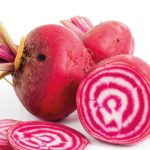
Chioggia Beetroot
I mentioned honey. Beetroot has a natural sweetness. I recall being in a restaurant with a pal who expressed amazement at seeing beetroot cake on a menu. If you think about it, it's no more illogical than the ubiquitous carrot cake. Indeed, in olden days before sugar cane was available (and also in war time when its transportation was hazardous) a member of the beetroot family was almost our only source of sugar. It's a larger root, more akin to a turnip in size and without pigmentation. I could give you its Latin name too, but I suspect you don't give two hoots, and why should you?
It is surprisingly good for you, containing folate, manganese and potassium, as well as a lot of fibre. Athletes have taken to it because it's rich in nitrates. My esteemed personal trainer (yes, really) Kenny T knows all about this. In the body, those nitrates convert to nitric oxide, which helps improve blood flow and thus enhance endurance. The trouble is that if you were to consume enough solid beetroot to achieve this you would be unable to walk, never mind run. The answer? Shots of beetroot juice, I'm told, at a mere £3.50 per pop.
So there we have it - for now. More on Friday.
If you think I intend to apologise for any of the deliberate but excruciating puns which appeared in this article you little know your man